Safe transfer decision points
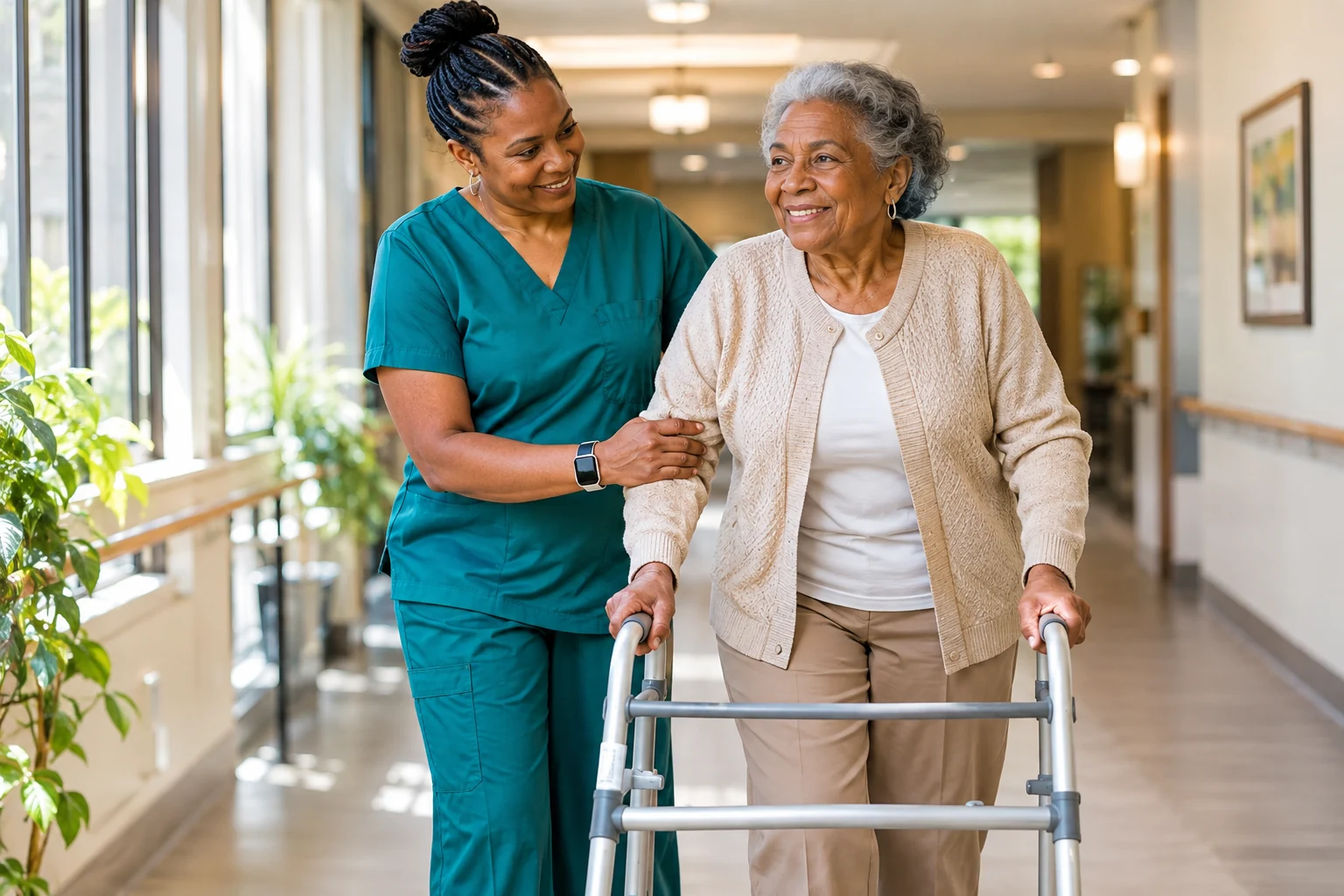
BY THE END OF THIS LESSON
Identify prerequisites for safe transfer and ambulation assistance.
Core concept
Transfer and ambulation decisions depend on mobility assessment, equipment suitability, fall risk, cooperation, staffing and the specific prescribed method. Gait belts, wheelchairs and other equipment require training and inspection. A transfer method appropriate yesterday may be unsafe after a clinical change.
Apply the concept
Use a pre-transfer assessment checklist in a hypothetical scenario: review current care-plan instructions, staffing, footwear, equipment and space, wheelchair brakes and whether the resident can participate. Leave step-by-step physical execution to qualified supervision and official skill practice.
Professional decision-making
If the resident collapses, reports severe dizziness, cannot bear weight as anticipated or equipment fails, do not improvise a lift. Follow the facility's emergency and safe patient-handling protocol.
On the job
- Read the care plan's transfer method and number of staff every time; it can change.
- Check the equipment, such as gait belt, wheelchair and brakes, before you begin.
- Make sure the resident is wearing non-slip footwear and the path is clear.
- Tell the resident what will happen and how they can help.
- Never do a two-person transfer alone. Wait for help and keep the resident safe meanwhile.
Case study
An aide is alone with a resident whose care plan specifies a two-person transfer, but the second worker has not arrived.
Think about what you would do, then show the recommended response
Wait for authorized assistance, communicate delay respectfully and maintain the resident's safety rather than attempting the transfer alone.
Your practice task
Transfer go/no-go decision sheet with equipment, staffing and escalation fields. Check yourself: Assigned assistance level respected. Equipment and environmental risks recognized. Stop-work conditions explicit.
Common misconception
A video or checklist cannot validate a learner's transfer technique or authorize a one-person transfer.
Check yourself
- The care plan says two people, but you're alone. What do you do?
- Name three things to check before a transfer.
- What should you do if the resident suddenly can't bear weight mid-transfer?
Show the answers
1) Wait for help, explain the delay kindly and keep the resident safe. 2) The care plan, the equipment and brakes, and footwear and a clear path. 3) Follow your trained emergency and safe-handling procedure and call for help; don't improvise a lift.
Sources
Checked against the official sources listed below on November 9, 2026. Educational only: not medical, legal or regulatory advice, state-approved training, or certification.