Recognizing emergencies and calling for help
BY THE END OF THIS LESSON
Recognize urgent danger signals and activate authorized facility emergency response without attempting untrained treatment.
Core concept
Care environments maintain emergency procedures identifying alarms, communication channels, assigned response staff and equipment locations. Potential emergencies include unresponsiveness, severe breathing difficulty, collapse, uncontrolled bleeding or other sudden deterioration. The CNA promptly observes and summons qualified assistance; interventions depend on current certification, training and local procedures.
Apply the concept
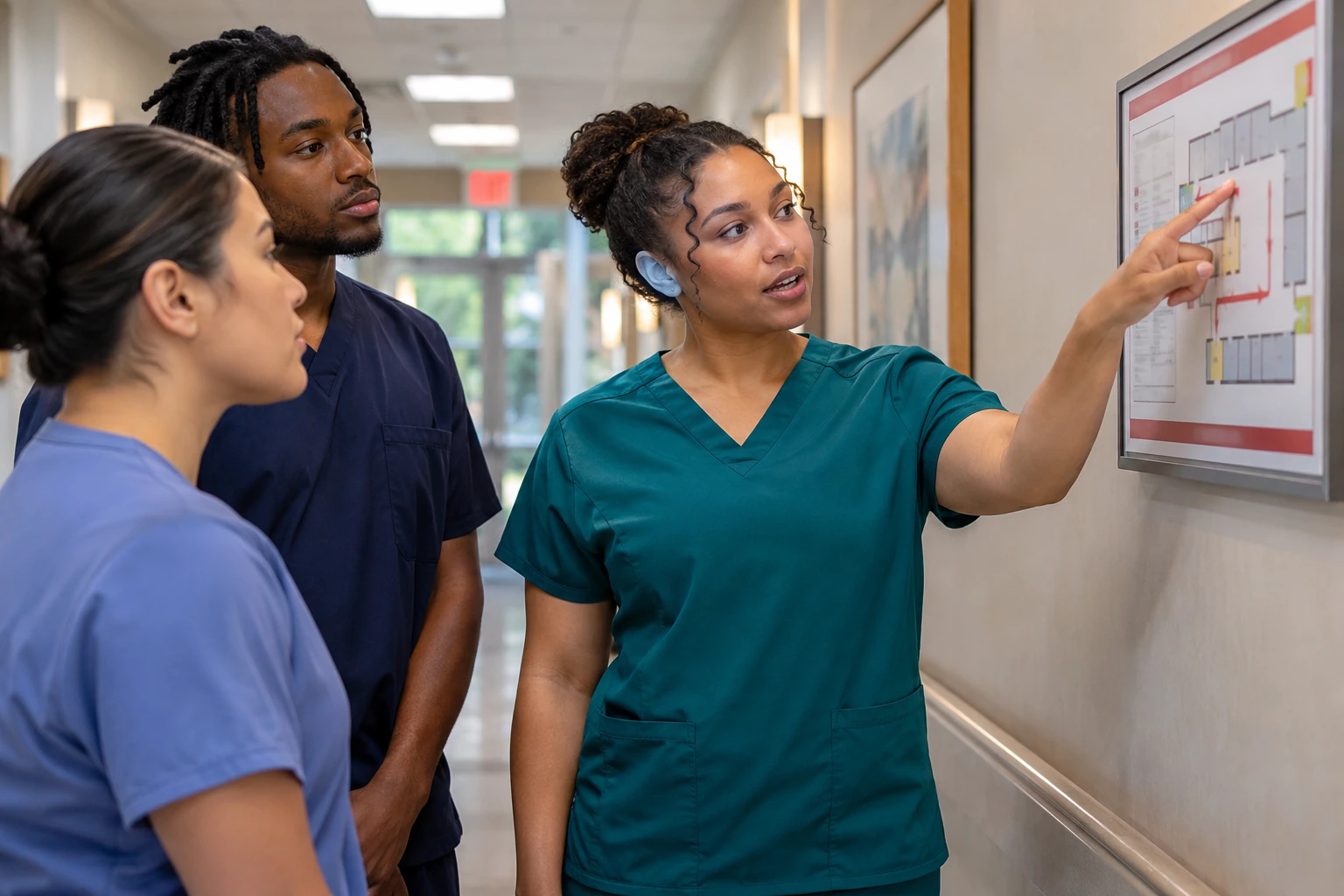
Use fictional day and overnight scenarios to locate simulated call systems, team contacts, backup response routes and evacuation or emergency equipment. Write concise urgent reports specifying the observation, time, person and immediate danger rather than a diagnosis.
Professional decision-making
Never delay an emergency call to finish charting, treat a text to an off-duty colleague as sufficient response, or perform an unfamiliar intervention from an online lesson. Facility-specific emergency training and responder directions take precedence.
On the job
- Learn where alarms, emergency call buttons and emergency equipment are on your unit.
- Know who to call for each type of emergency and how to reach them.
- Stay with the resident and call for help using the facility's system.
- Give clear facts to responders: what you saw, when, and any changes.
- Only do emergency actions you are trained and certified for.
Case study
A resident who was awake earlier is now difficult to rouse and breathing abnormally. The assigned nurse is in another unit.
Think about what you would do, then show the recommended response
Activate the facility's immediate response procedure, request appropriate qualified assistance and relay the specific observed changes and time.
Your practice task
Emergency escalation card listing call methods, backup contacts, safety roles and factual handoff cues. Check yourself: Urgent danger distinguished from routine follow-up. Local response pathway and backup are identified. Untrained physical intervention is not recommended.
Common misconception
Online scenario practice does not substitute for current emergency-response training, supervised assessment or facility-specific protocols.
Check yourself
- Name three signs of a possible emergency.
- What's your first action if a resident is unresponsive?
- Should you give treatment you haven't been trained in?
Show the answers
1) Examples: unresponsiveness, severe trouble breathing, collapse, heavy bleeding. 2) Call for help immediately using the facility's emergency process and stay with the resident. 3) No. Act only within your training and certifications.
Sources
Checked against the official sources listed below on November 9, 2026. Educational only: not medical, legal or regulatory advice, state-approved training, or certification.